
America can get the minerals but can’t refine them. Until now.
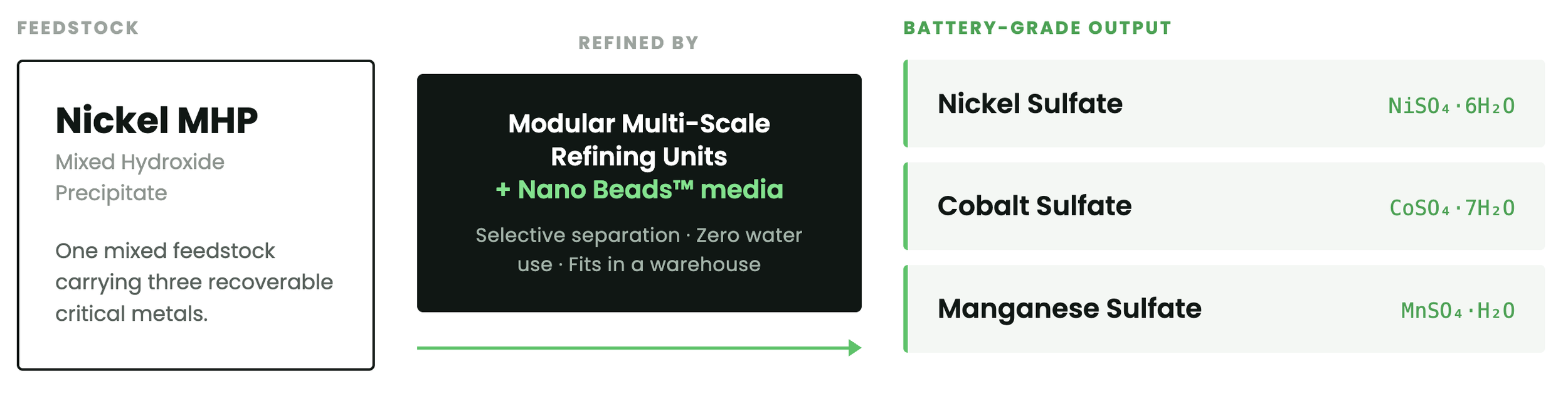
One feedstock in. Three battery-grade metals out.
The refinery processes nickel Mixed Hydroxide Precipitate (MHP) — a Class 2 intermediate feedstock purchased on the open metals market from globally diversified suppliers and shipped in standard sealed one-ton super sacks. From that single input, our proprietary process separates and refines all three contained high-value metals into battery-grade Class 1 sulfate: nickel sulfate, cobalt sulfate, and manganese sulfate. All three, on the same equipment, in the same facility, with nothing sent to landfill. No other domestic process does this.
For a full explanation of how the process works, see Clean Process.
Not Years. Months.
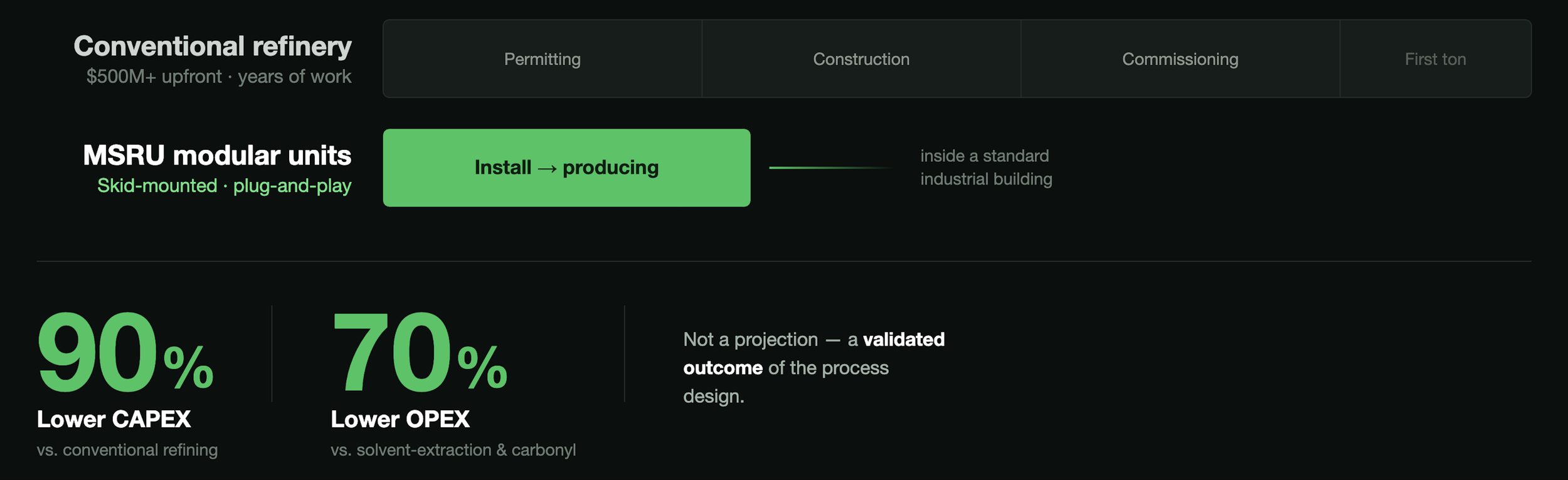
Conventional refineries require $500M or more in upfront capital and years of permitting, construction, and commissioning before producing a single ton of output. Our modular Multi-Scale Refining Units (MSRUs) operate inside a standard industrial building — no greenfield construction, no purpose-built mega-site. Each unit is skid-mounted, plug-and-play, and begins producing battery-grade nickel sulfate almost immediately upon installation. Our process runs at 90% lower CAPEX and 70% lower OPEX than traditional solvent extraction or carbonyl-based refining — not as a projection, but as a validated outcome of the process design.
Proven at the skid.
Now at commercial scale.
The refining demo skid is not a laboratory prototype. It is a working, operational unit running the same chemistry that scales directly to commercial production — federally funded and validated. Each MSRU processes one ton per day of contained nickel from MHP feedstock, yielding 4.48 tonnes of crystallized battery-grade nickel sulfate hexahydrate. Scaling to 10,000 tons per year of contained nickel (44,800 tons of nickel sulfate) requires 27 units — replicating a proven module, not re-engineering an unproven process at massive capital risk. That distinction is what makes this months-to-market, not a years-long development project.
Florida isn't a coincidence. It's a strategic decision.
Siting the refinery in Central Florida places it within direct reach of three major port hubs — Tampa, Jacksonville, and Miami — for receiving MHP feedstock from global suppliers and distributing finished sulfates to domestic manufacturers. Florida's industrial permitting environment is aligned with a facility that uses only non-toxic commodity reagents, produces zero hazardous waste, and operates entirely within a standard building footprint. The Southeast US has a growing concentration of high-tech, battery, and defense-related manufacturing companies.
Nickel: Benchmark Mineral Intelligence (Nickel Forecast, subscription), IRENA, IEA Critical Minerals reports, or the EU JRC/Roskill Class 1 nickel study.
Cobalt: IEA's Global EV Outlook / Critical Minerals Outlook (free annual reports), Benchmark Cobalt Forecast, Cobalt Institute.
Manganese: Fastmarkets, Adamas Intelligence (EV battery capacity/material tracking), USGS Mineral Commodity Summaries (manganese), and the EU JRC/Roskill studies.
The demand is here.
The domestic supply isn’t.
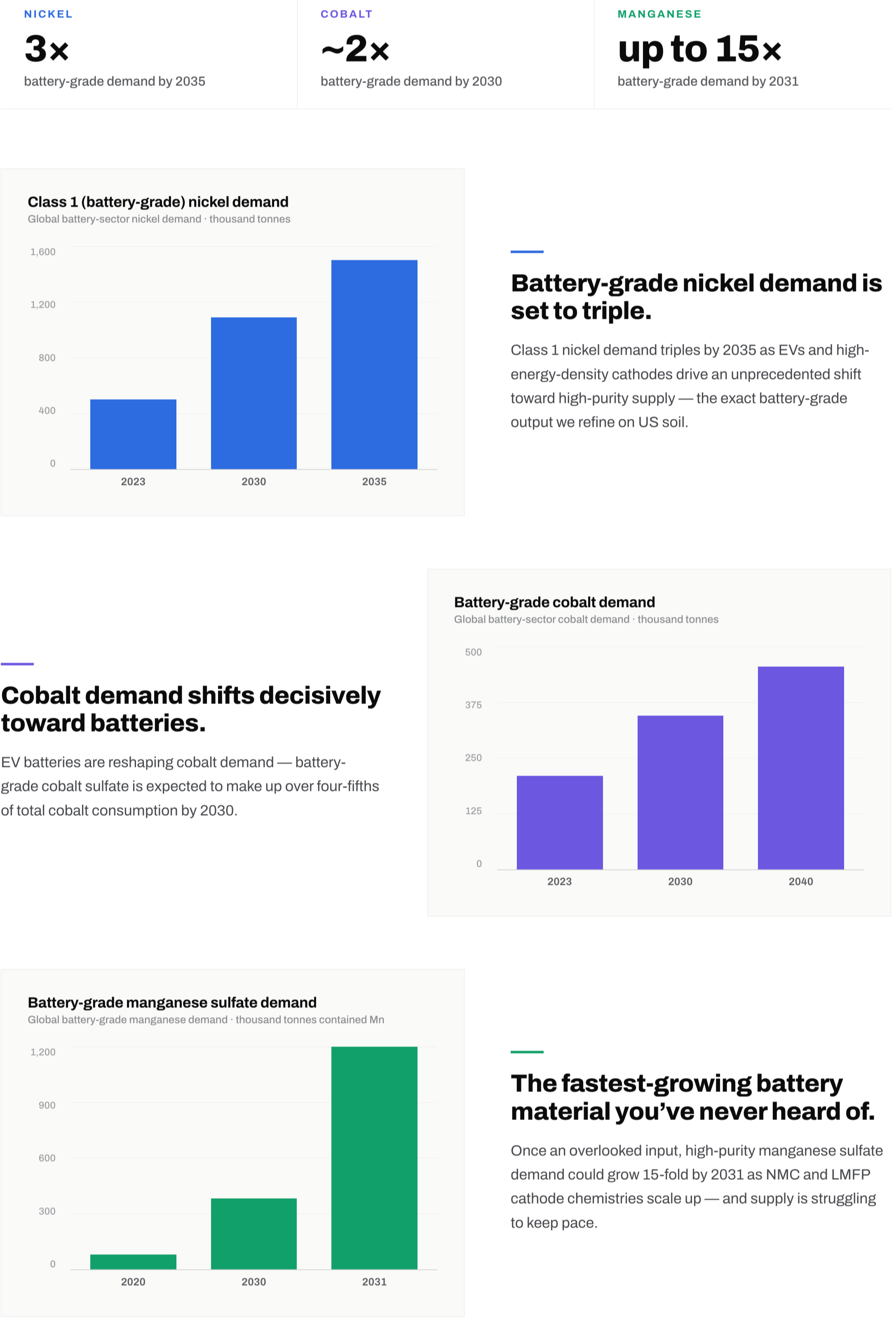
Battery-grade nickel, cobalt, and manganese are all on the same trajectory: explosive growth driven by EV adoption, energy storage, and high-density cathode chemistry — with no meaningful domestic refining capacity to meet it.
Built for the supply chains that have no domestic alternative today.
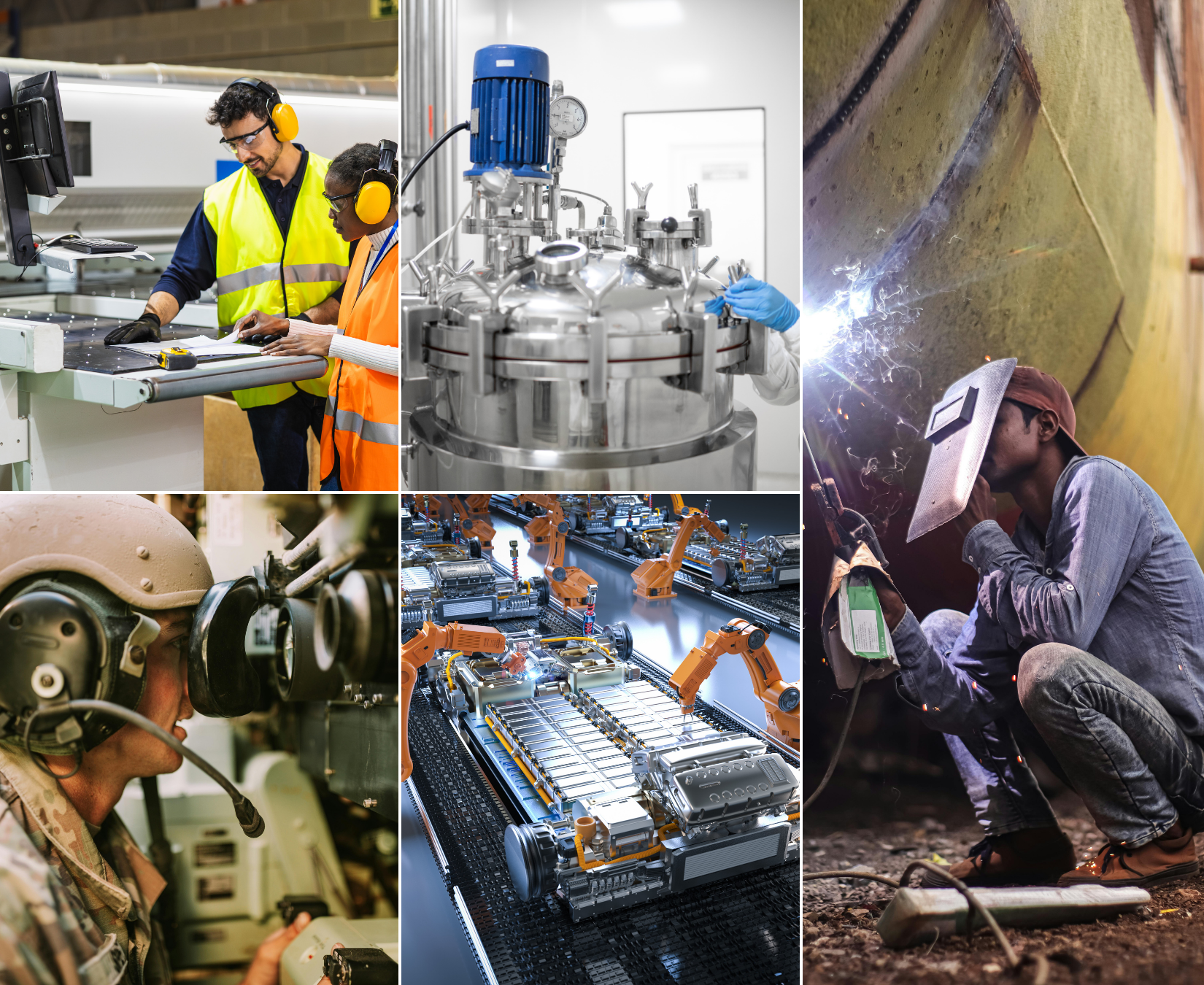
At full capacity, the Florida refinery produces 44,800 tons per year of battery-grade nickel sulfate alongside meaningful volumes of refined cobalt and manganese sulfate — the precursor materials that U.S. cathode and battery cell manufacturers currently import in their entirety. Output is designed to flow directly into the industrial supply chains that need it most: EV and energy storage battery manufacturers building on U.S. soil, specialty alloy and stainless steel producers, Department of Defense contractors operating under domestic sourcing requirements, and aerospace and electronics manufacturers. By keeping every step of the refining process within the United States, this facility delivers a traceable, domestically processed critical mineral supply that does not depend on foreign infrastructure at any stage.