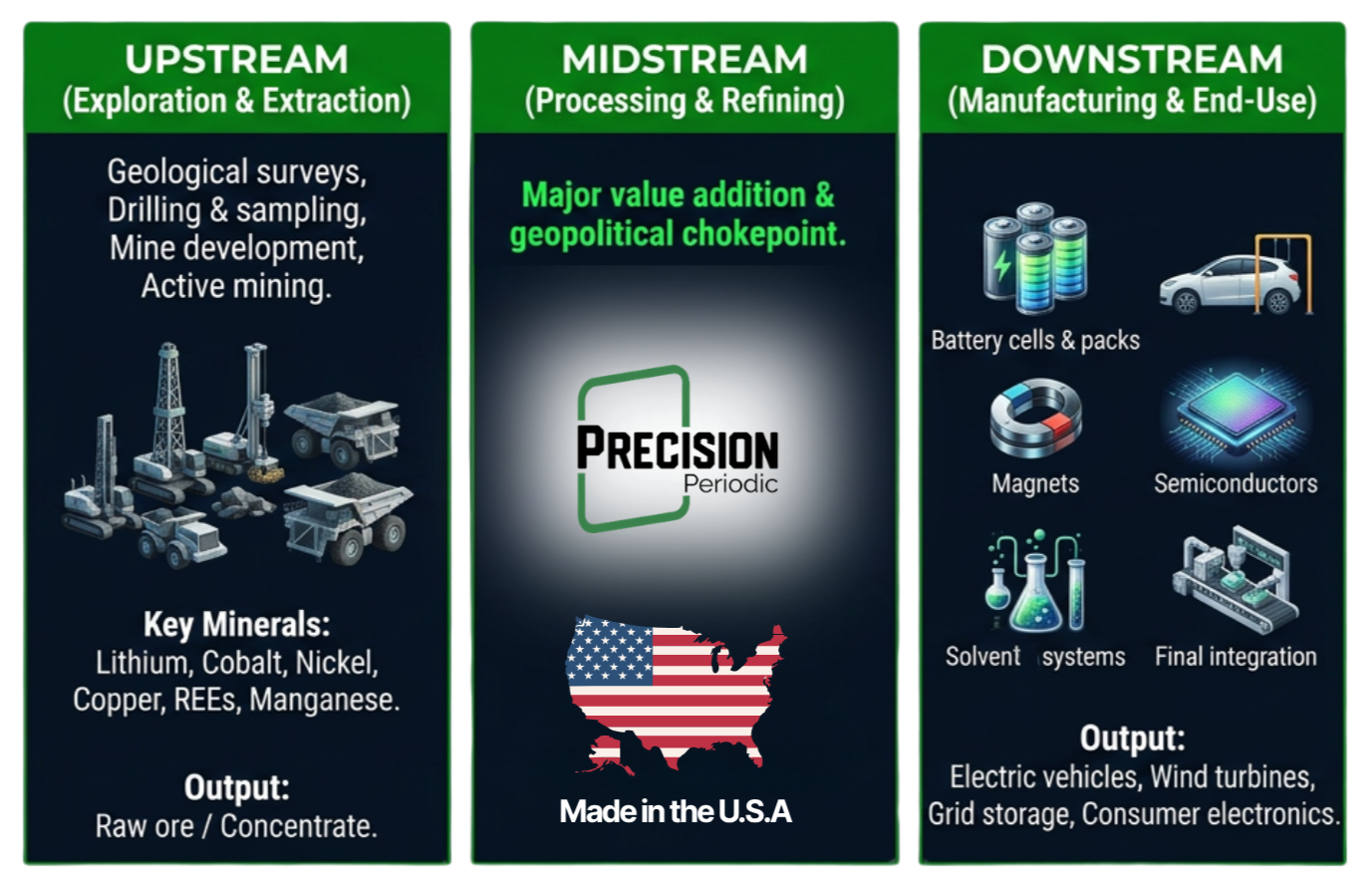
Building America’s Only “Clean Process” Critical Minerals Refinery.
Nickel, Cobalt, Manganese, & More from Multi-Source Feedstocks • Zero Waste • No Water Use • Standard Industrial Building • Little to No Permitting
China Controls refining.
We’re taking it back.
Refining unlocks the value in Critical Minerals. The world ships its raw materials to China to be processed — Precision Periodic refines them here, clean and at a fraction of the cost.
A Refinery That Changes Everything
Conventional refineries are slow, extremely capital-intensive, heavy water users, and generate massive waste — often taking years to build and facing major permitting hurdles. We need a fundamentally new type of refinery.
It’s not the mine. It’s the refinery.
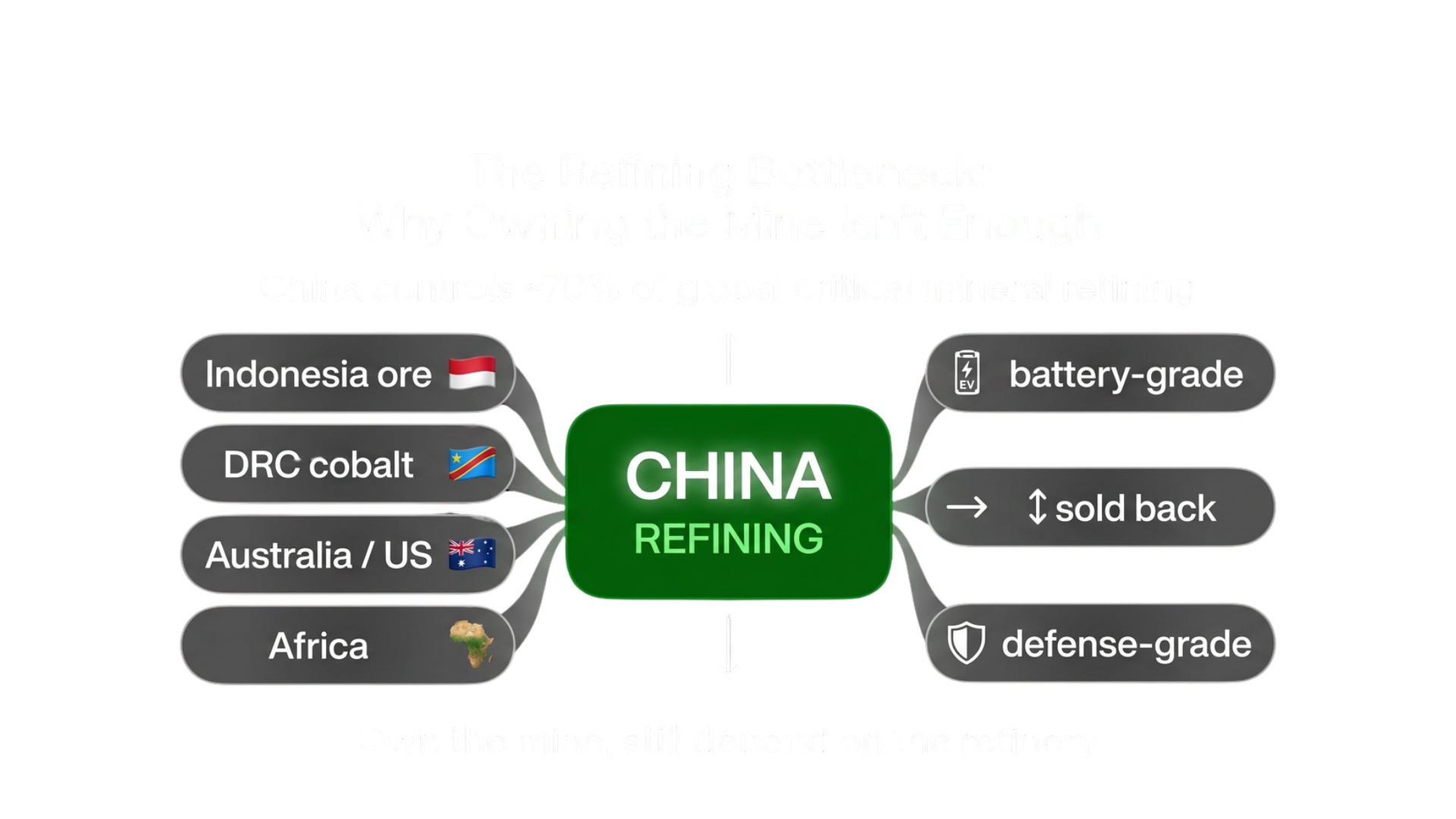
A country can own the ore and still depend entirely on whoever refines it, The U.S. can mine and import but still has to ship it to China to be processed.
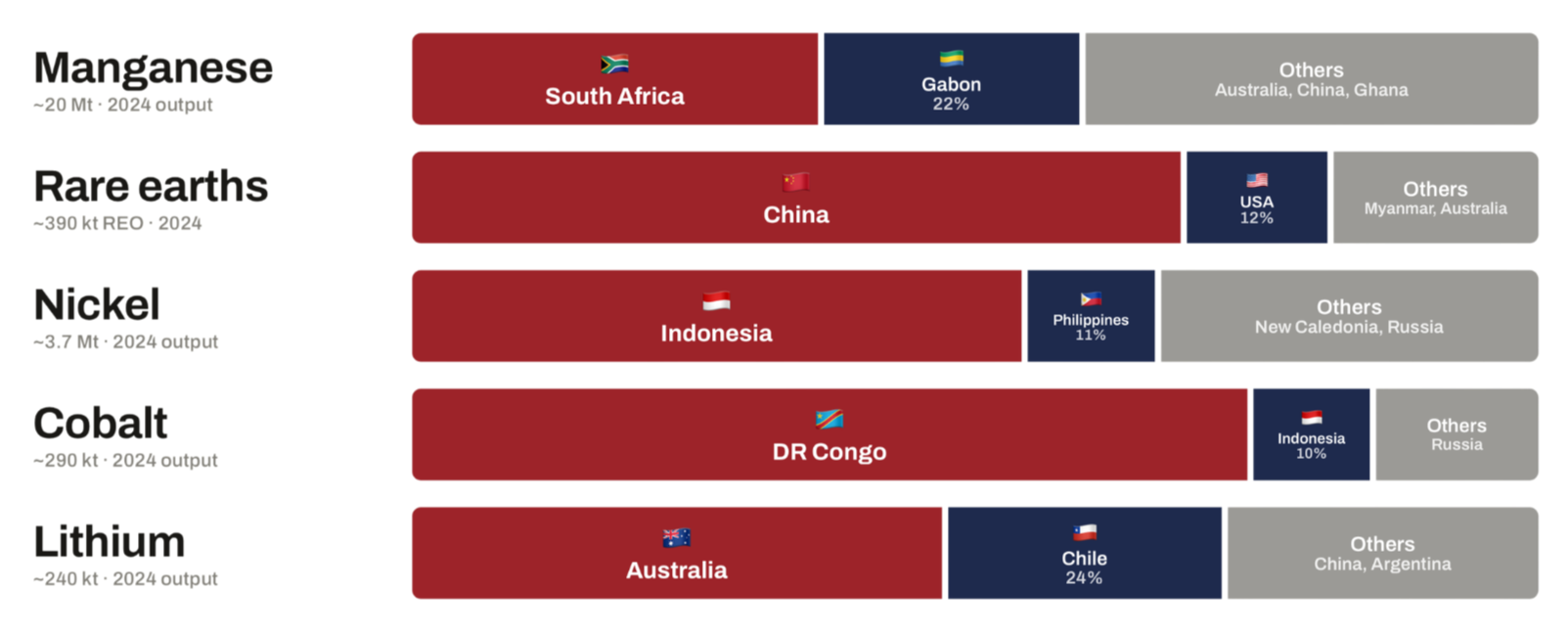
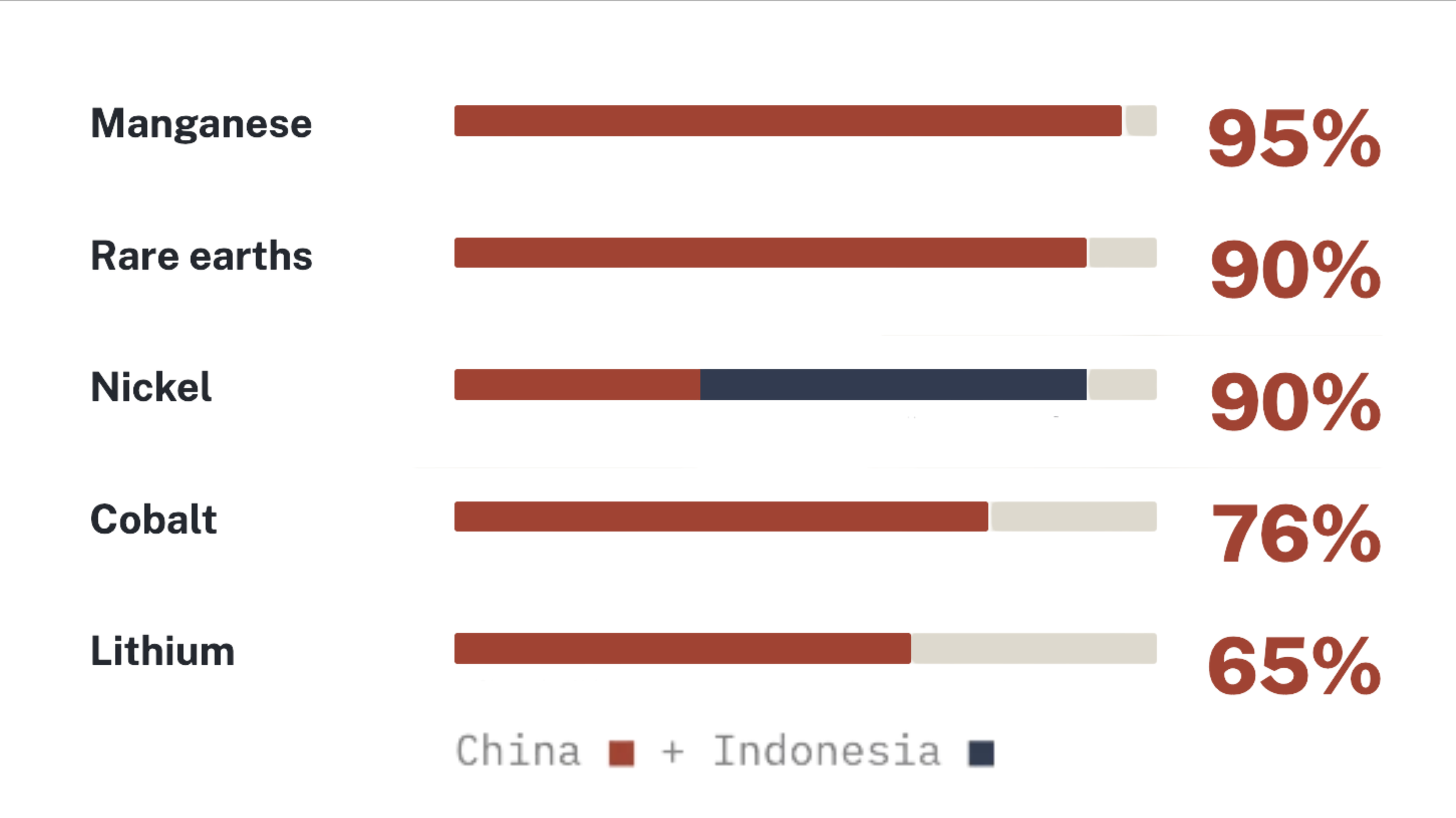
Mining is diverse. Refining is not.
Mining by mineral and country.
Refining by mineral and country.
China is the world’s #1 refiner of 19 of 20 strategic minerals.
THE U.S. POSITION
~0%
The refining capacity for battery-grade nickel, cobalt, and manganese.
We hold reserves and sign mining deals — then send the minerals to be processed by the one country we are competing with.
The chokepoint is already a weapon.
200+ export controls on critical minerals since 2018 — each one a preview of what dependence costs.

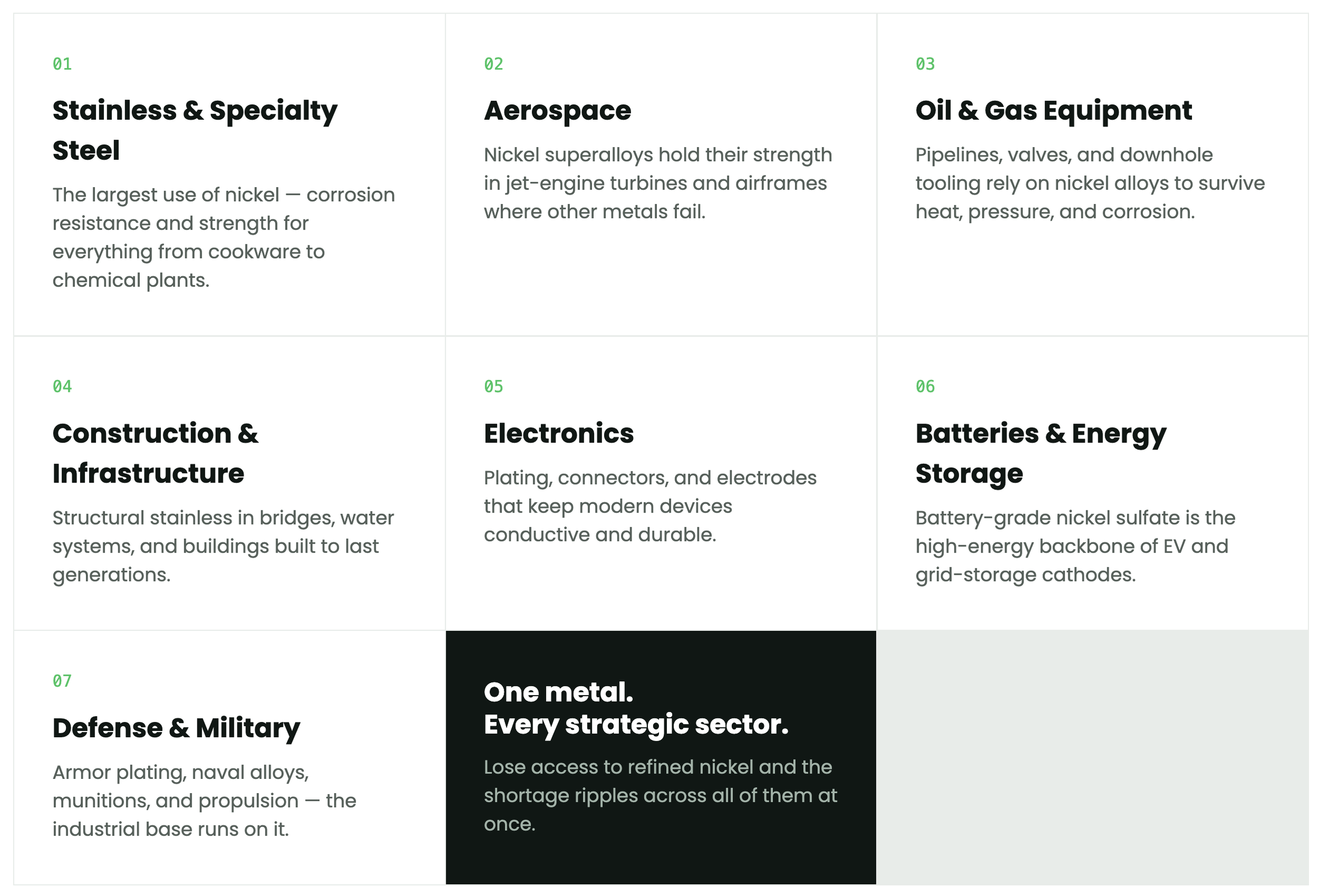
Nickel isn't a niche input. It's everywhere that matters.
A refined nickel shortage doesn't hit one industry in isolation — the same metal underpins EVs, defense systems, energy storage, aerospace, and industrial manufacturing simultaneously. Few critical minerals carry that kind of cross-sector weight, which is exactly why the absence of domestic refining capacity is a strategic vulnerability, not just a supply chain inconvenience.
We start where the dependence is deepest: nickel.
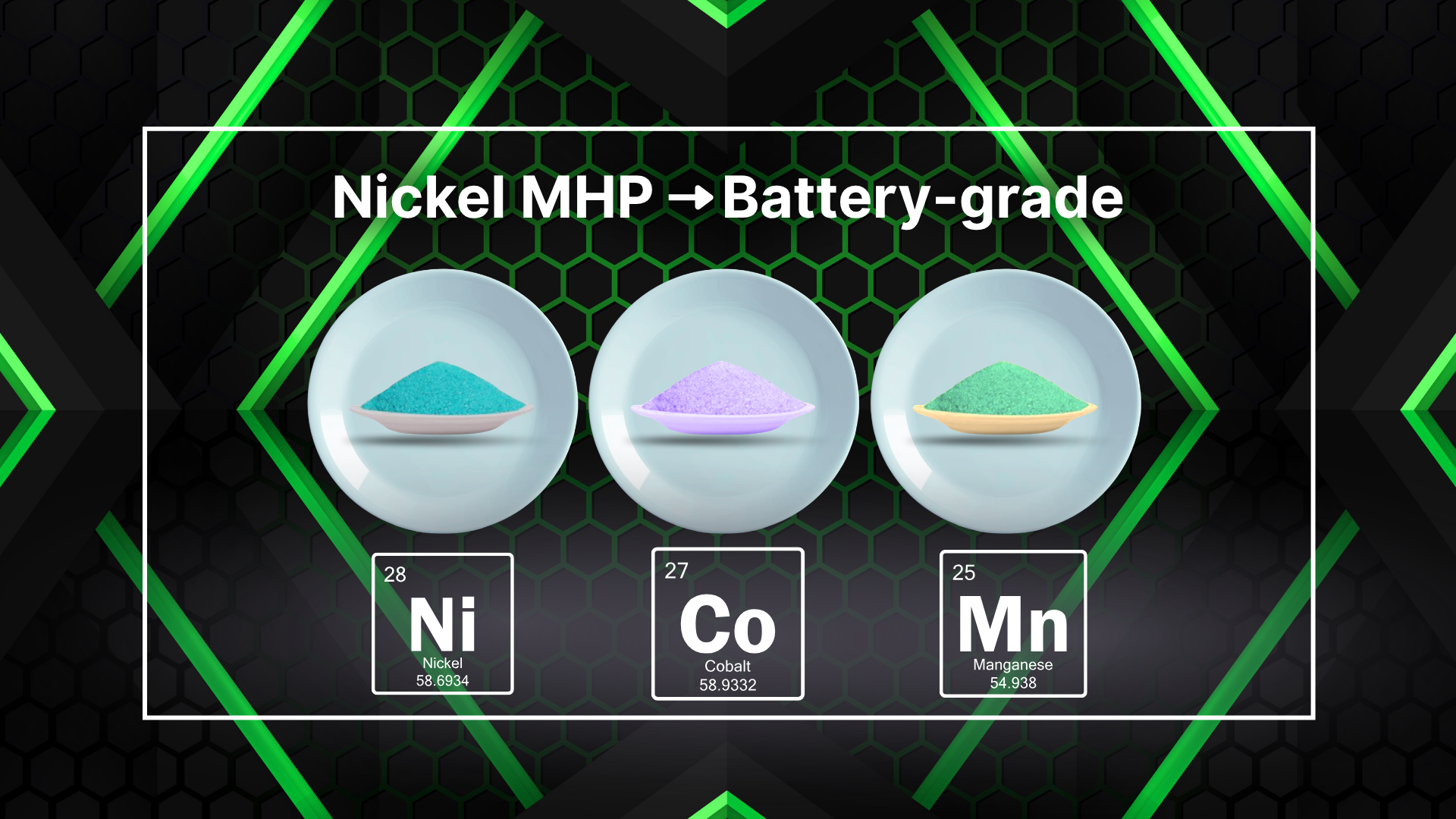
Domestic refining doesn't begin everywhere at once — it begins with the feedstock that unlocks the most value and addresses the deepest gap. Nickel MHP is that feedstock. It contains three of the highest-value battery metals in a single intermediate product, it trades openly on the global market, and it is currently shipped out of the country to be refined. That changes here.
BATTERY-GRADE OUTPUT

One feedstock in. Three refined metals out. On U.S. soil.
From a single nickel MHP input, our Florida refinery separates and refines nickel, cobalt, and manganese into battery-grade sulfate — the precursor materials U.S. cathode manufacturers currently have no domestic source for. Modular, deployable in months, and targeted at 10,000 tons per year of contained nickel at full capacity.
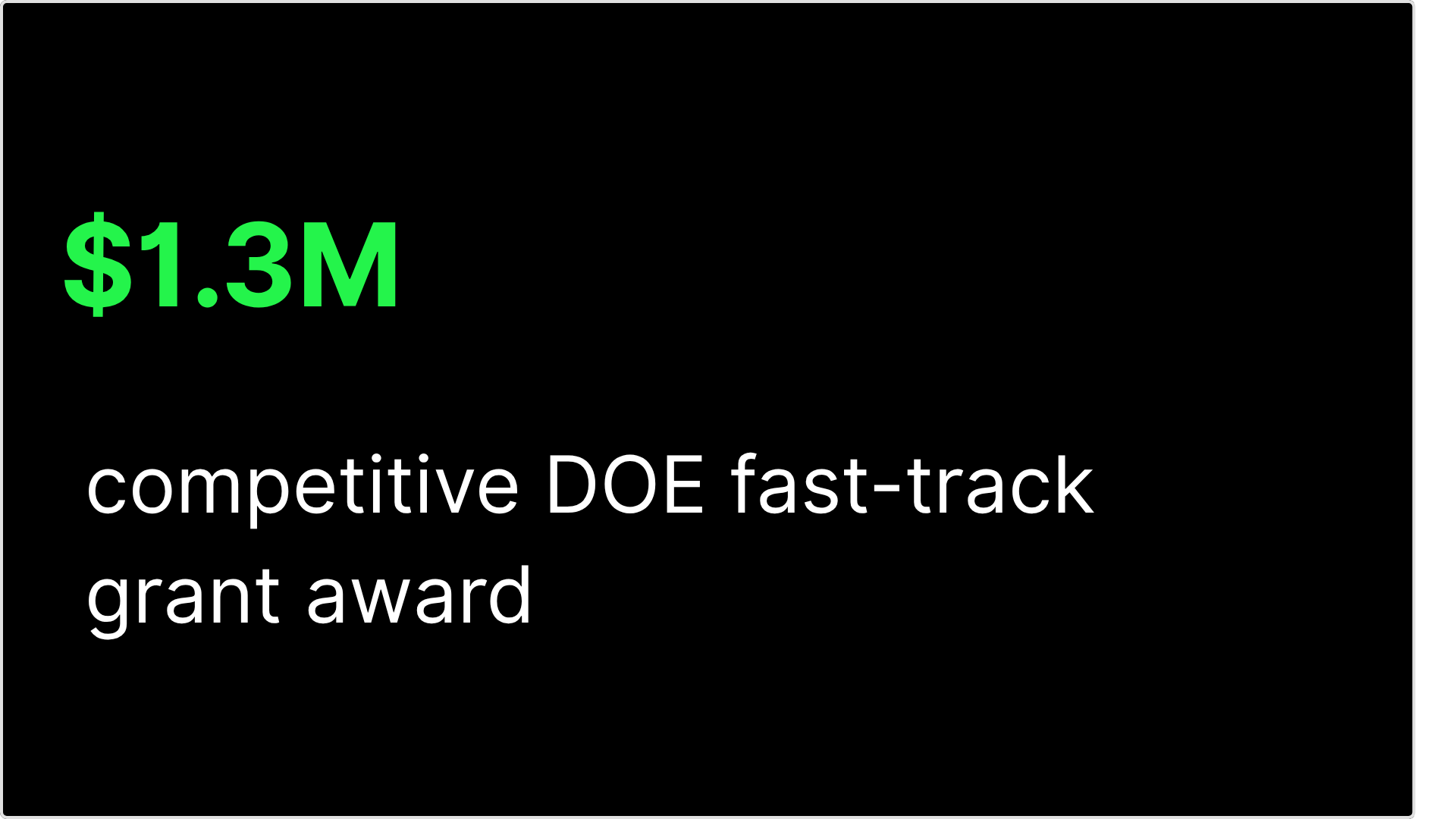
Federally funded. Proven at scale. Ready now.
The process is not a concept. It is a validated, operating system — funded and tested, running the same chemistry that scales directly to commercial production. Our proprietary Nano Beads™ technology refines all three metals from one feedstock, on the same equipment, with zero hazardous waste and a permitting profile that makes fast domestic deployment possible for the first time.
The midstream is up for grabs. We’re taking it back.
We are building the domestic critical mineral refining infrastructure the United States has never had — and we are doing it now. If you are a miner, recycler, manufacturer, or investor who sees what we see, we want to talk.